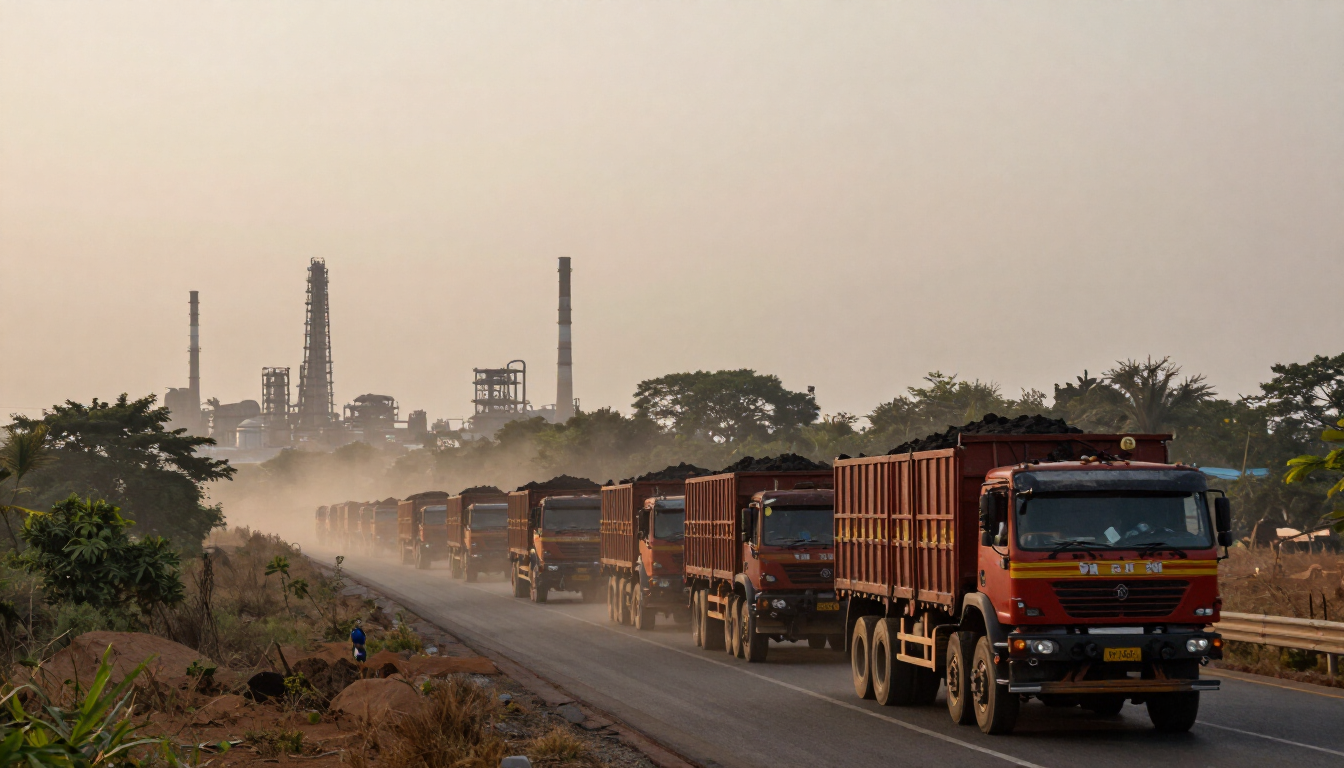
Odisha is India's largest coal-producing state, accounting for roughly 25% of national coal output. But production figures tell only half the story. Getting coal from the mine to the consumer — a steel plant, a power station, a cement unit — is a logistics operation that runs 24 hours a day, 365 days a year, across some of the most challenging terrain in eastern India.
For transporters working in this space, understanding the key corridors is not optional. It determines which contracts you can serve, what equipment you need, and what rate per tonne you can realistically quote.
The Major Coal-Producing Belts of Odisha
Odisha's coal reserves are concentrated in three primary districts:
Sundargarh
Sundargarh is home to the Ib River coalfields and the Kulda, Belpahar, and Lakhanpur mines. This is the heartland of the western Odisha coal belt, with output going predominantly to steel plants in and around Raurkela, as well as to power plants operated by NTPC and Vedanta.
Angul
Angul hosts the Talcher coalfields, one of the densest concentrations of surface coal mining in the country. Mahanadi Coalfields Limited (MCL) operates multiple opencast and underground mines here. Freight from Talcher moves east towards Paradip port for export, and west/north to industrial consumers in Odisha, Jharkhand, and Chhattisgarh.
Jharsuguda
Jharsuguda serves as a logistics hub connecting the coal belt to the national rail and road network. Several large power plants — IB Thermal Power Station, Jharsuguda Power Plant — draw coal directly from nearby mines, reducing transport distances.
Key Road Freight Corridors
Kulda–Raurkela (approximately 80–100 km)
This is one of the most active short-haul corridors in western Odisha. Trucks carry coal from the Kulda mine area to steel plants and consumers in and around Raurkela Industrial Township. High trip frequency, relatively flat terrain, and proximity to NH-143 make this a preferred route for newer transporters building trip volumes. Rates typically range from ₹550–₹750 per tonne depending on contract type and diesel cost at the time.
Talcher–Angul–Paradip (approximately 200–240 km)
This is a long-haul corridor with higher per-trip gross revenue but also higher diesel, driver cost, and wear exposure. Trucks moving on this route are typically 10-wheel or 12-wheel heavy commercial vehicles. Paradip Port handles coal export, so volume on this route tracks international commodity prices closely.
Sundargarh–Rourkela–Jharsuguda (triangular corridor)
This covers inter-district movement within the Sundargarh–Jharsuguda–Rourkela triangle. It serves both mines and industrial end-users with flexibility. Transporters on this corridor often carry coal in one direction and return loads of fly ash, steel products, or construction material, improving per-trip economics.
What Determines Who Gets a Contract
On any major corridor, freight contracts from coal companies, mine operators, or trading intermediaries go to transporters who can demonstrate:
Fleet size sufficient to guarantee committed trip volumes per day or per month. A buyer needing 100 trips per day will not award the entire contract to an operator with 3 trucks.
Compliance documentation — GST, PAN, company registration, valid vehicle fitness certificates, driver licences, insurance. One missing document disqualifies a vendor in most corporate onboarding processes.
Bank references and credit history. Post-GST, most corporate buyers process payments in 15–30 day cycles. A transporter who cannot carry 15 days of working capital is a risk to the buyer's operation continuity.
Track record on the specific route. Knowledge of weighbridge locations, overloading checkpoints, toll structures, and seasonal road conditions on a corridor is a real competitive advantage.
Where Mishra Heavy Carriers Operates
Mishra Heavy Carriers Private Limited currently serves the Kulda mine to steel plant corridor out of Raurkela, operating a fleet of 9 trucks across the Sundargarh district. The company is structured to serve short-to-medium haul coal freight within western Odisha, with a base at Civil Township, Raurkela Industrial Township.
For freight inquiries on the western Odisha corridor, contact: accounts@mishraheavycarriers.com or +91 98181 21704.
Frequently Asked Questions
What is the current freight rate per tonne for coal in Odisha?
Rates vary by corridor, contract type, and diesel price at time of agreement. Short-haul routes (under 100 km) typically run ₹500–₹800 per tonne. Long-haul routes (150 km+) can go ₹900–₹1,400 per tonne. These are indicative — actual rates are negotiated.
Do coal transport contracts require e-way bills?
Yes. Any coal movement above ₹50,000 in value requires a valid e-way bill generated on the GST portal. The transporter is responsible for carrying the e-way bill during transit.
Which companies are the largest buyers of road freight in Odisha's coal sector?
Mahanadi Coalfields Limited (MCL), steel plants, power utilities, and trading companies are the main contract givers in Odisha's coal freight market.
RELATED READING
For freight inquiries: accounts@mishraheavycarriers.com | +91 9938121704
Keywords & Tags
Need a freight quote for your coal or bulk goods?
Get a transparent, GST-compliant quote from Mishra Heavy Carriers™ in minutes.
Get a freight quote